ADC FOODS.
THE GROWTH
AUDIT.

Prepared by Aetis · 19 October 2026
Public-source review · Internal review draft

The food looks appealing.
Make the buying decision feel just as clear.

ADC has a recognizable identity, everyday meal ideas and an accessible starter. The next job is to close gaps in product information, delivery reassurance and support, then strengthen the founder connection.

Read the short version

Website evidence, strategic interpretation and ideas to test are labelled separately. This report does not establish commercial performance.

A strong base.
Some essential gaps.

Resolve the known trust and information gaps before scaling acquisition. Acquisition simply means bringing in new customers.

Keep and build on

  • Distinctive pack-led identity and flavour-led presentation.
  • A food-first message that extends beyond post-workout eating.
  • A four-flavour chicken starter with clear per-pack pricing.
  • Meal ideas, frozen-storage guidance and a consistent current product-page shell.

Make the next decision easier

  • Restore working shipping, refund and contact information.
  • Put ingredients, allergens and approved nutrition into readable product text.
  • Clarify Pune delivery eligibility and costs before checkout.
  • Make tofu easy to shop and distinguish bulk packs from recurring subscriptions.
The strategic opportunity

Connect Suchitra’s verified reason for building ADC to the meal problem the food solves. Support that story with product facts, reliable delivery and a useful first-order experience.

Protein Pantry is a close category reference. Good Girl Snacks is a brand-story reference. Neither website establishes profitable growth, and no uplift forecast is implied here.

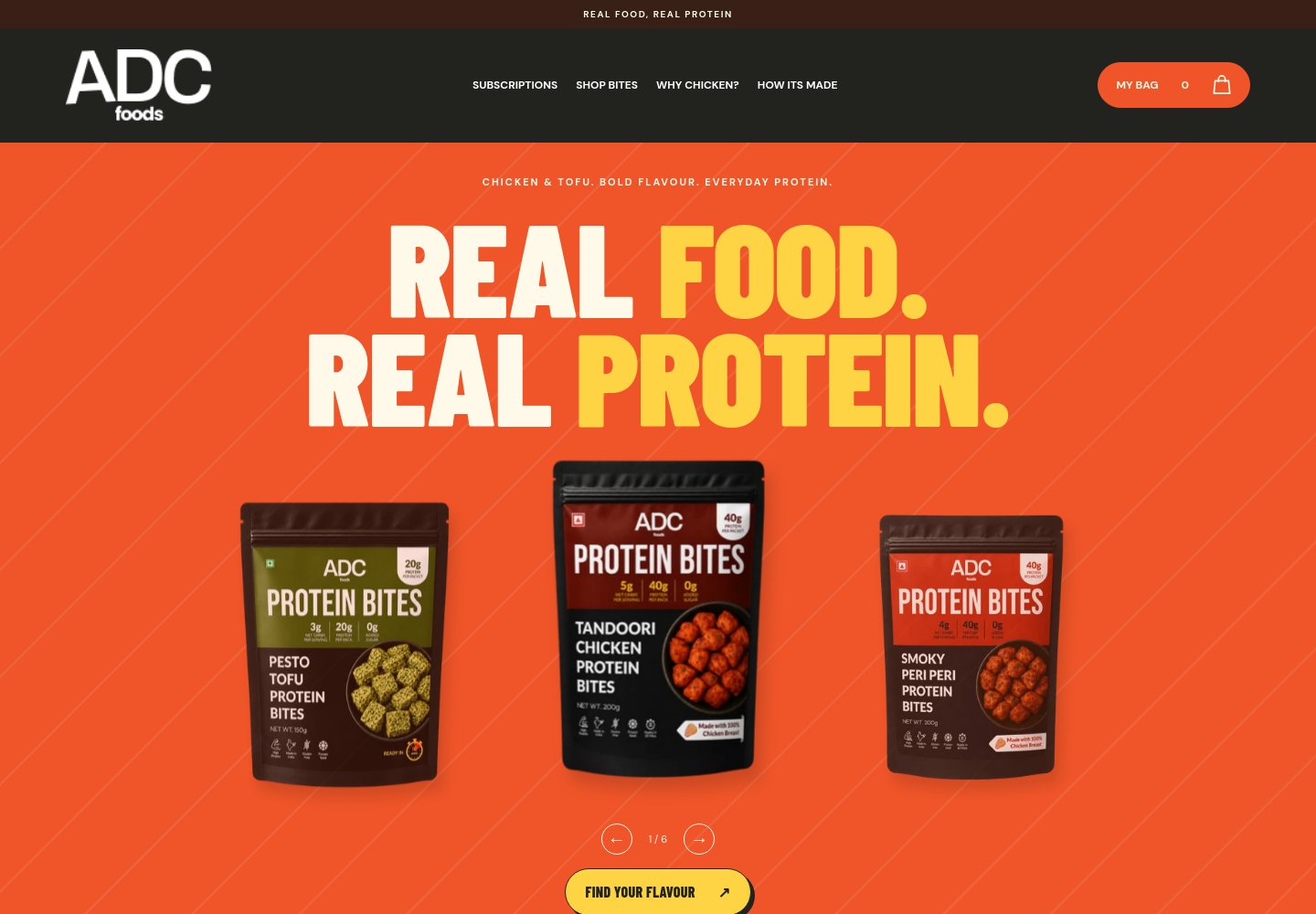
ADC’s current desktop homepage. The product packs and food-first proposition already carry a strong identity.
Screenshot · Captured 19 October 2026. ADC’s current desktop homepage. The product packs and food-first proposition already carry a strong identity. Original page ↗

Fix these before adding more traffic.

Priority reflects the observed buyer risk and dependency, not an estimated revenue impact. Effort needs confirmation from ADC’s team.

Fix first · Support

Restore the pages a worried buyer needs.

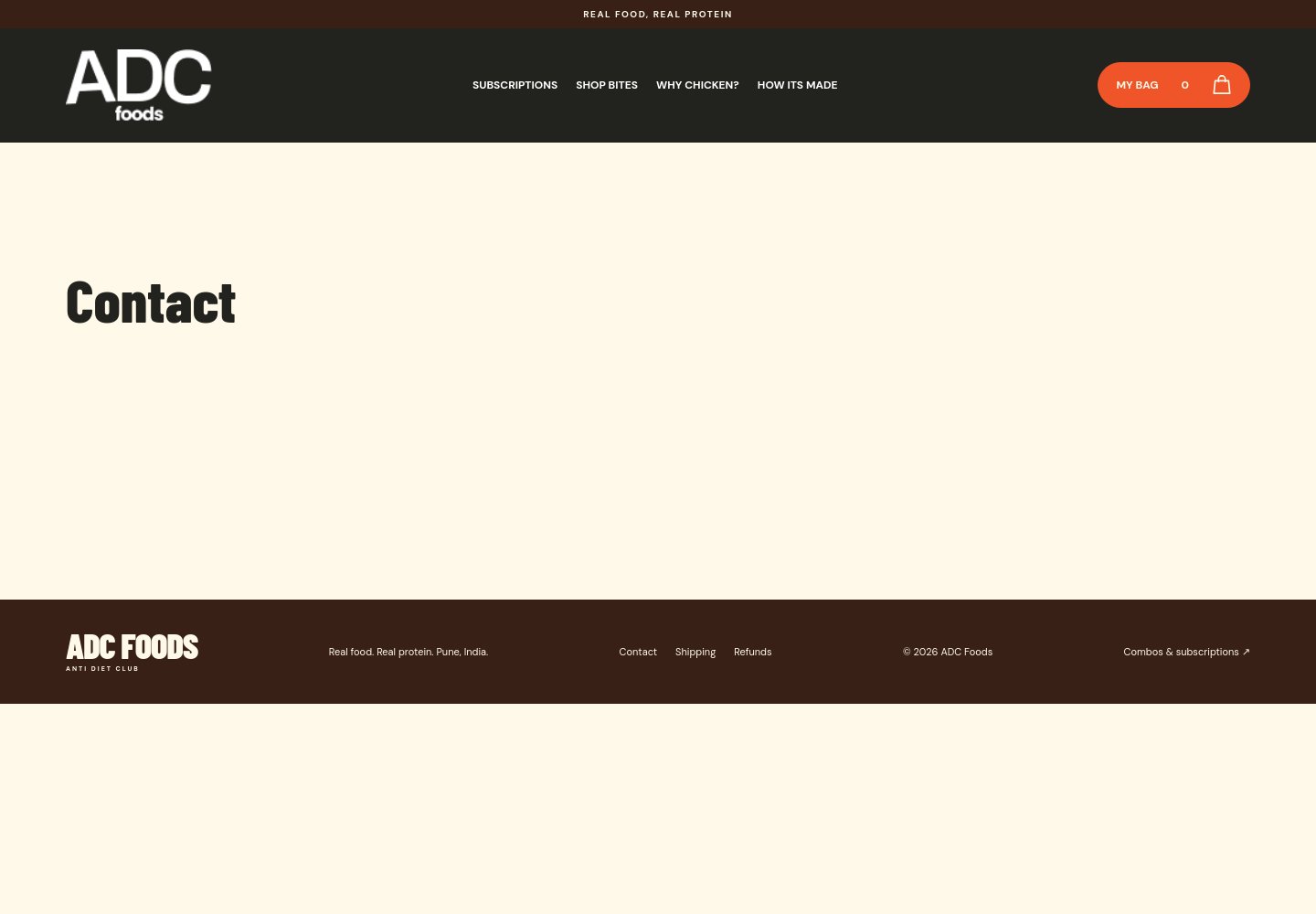
Shipping and refund links returned 404 (page not found). The contact page’s main content contains only its heading. Business contacts exist deeper in the privacy policy, so this is a broken obvious path rather than proof that no contact details exist.

Evidence and recommended fix ↗
Fix first · Food information

Answer ingredient and allergy questions before purchase.

Label images are available, but product text sends people to an image or a physical pack. Publish approved, readable facts for each flavour. Have the food owner reconcile the Pesto label’s nutrition columns.

Evidence and recommended fix ↗
Fix first · Delivery

Establish whether the order can arrive.

Pune-only delivery is disclosed, but final eligibility and charges are deferred to checkout. An early PIN check should show actual serviceability, the fee rule and a realistic delivery window.

Evidence and recommended fix ↗
Improve next · Offer clarity

Separate a stock-up from a subscription.

The navigation says subscriptions. The bundles page correctly says pack purchases do not create recurring payments. Use a destination name that matches the offer and bring the small starter forward.

Evidence and recommended fix ↗

Borrow the useful parts.

TL;DR Protein Pantry offers practical category lessons. Good Girl Snacks offers a coherent product world. ADC needs its own food, audience and delivery truth.

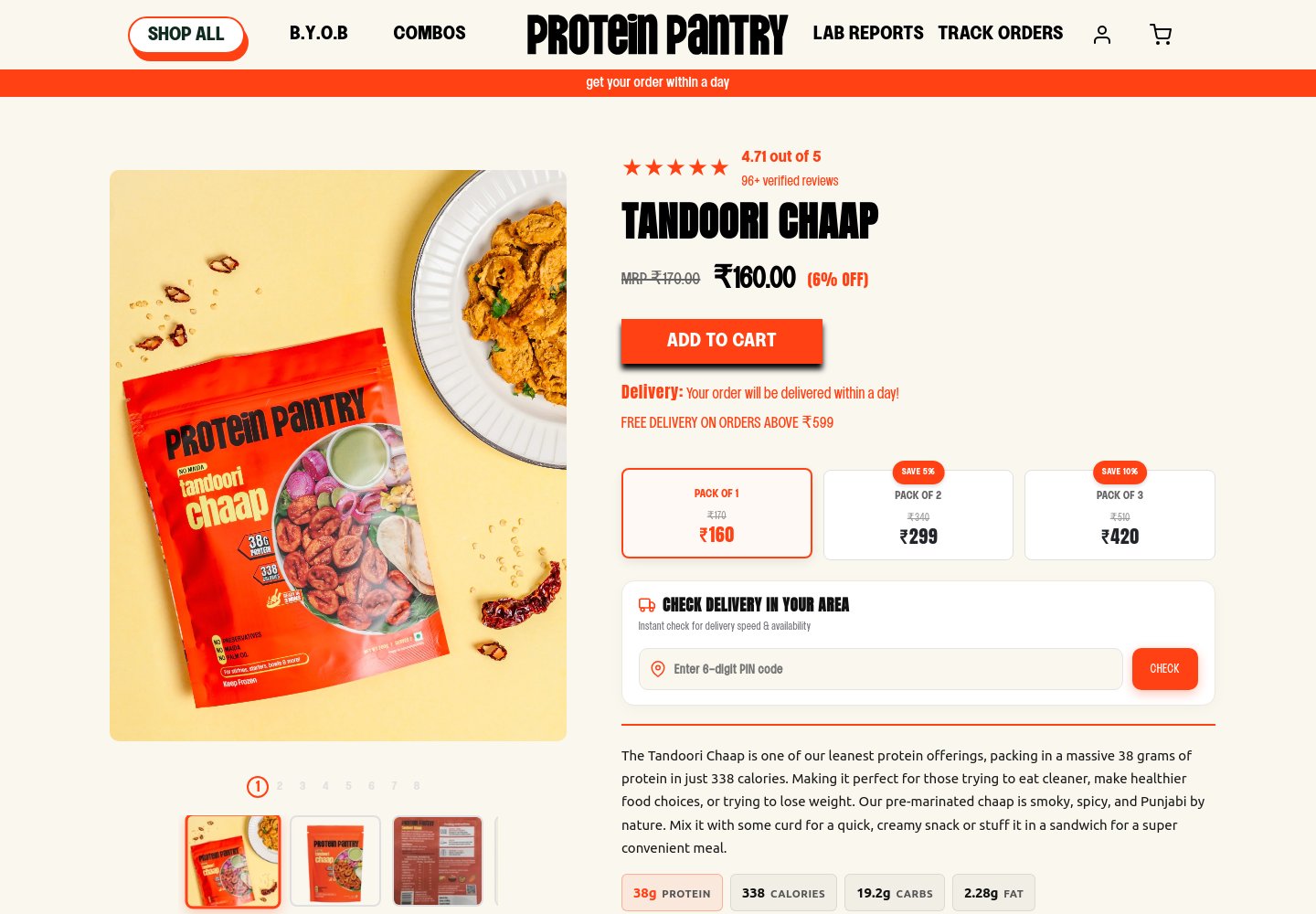
Protein Pantry places a PIN-code check and pack options near the purchase decision. This captures the interface; its delivery response and review verification were not tested.
Screenshot · Captured 19 October 2026. Protein Pantry places a PIN-code check and pack options near the purchase decision. This captures the interface; its delivery response and review verification were not tested. Original page ↗
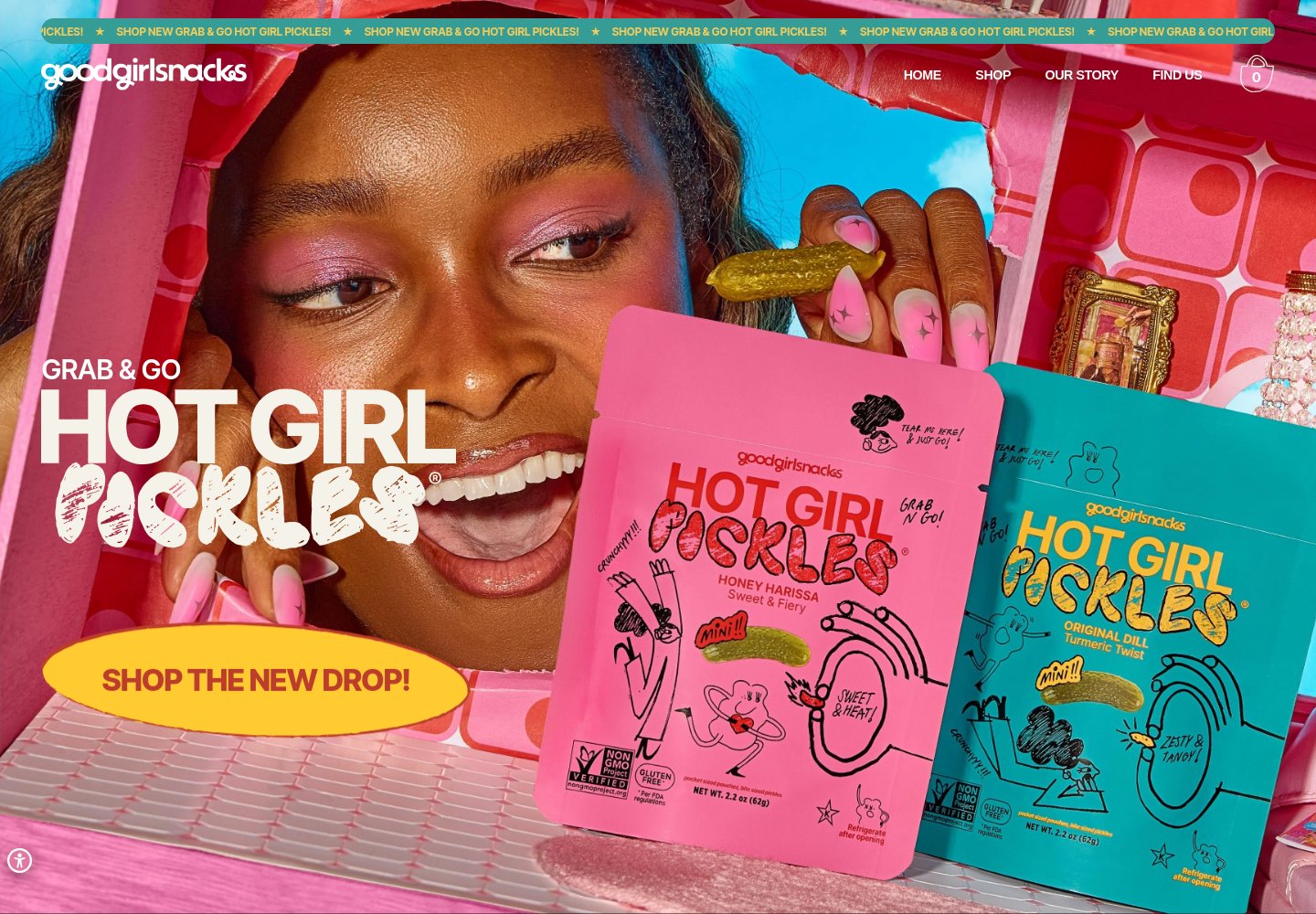
Good Girl Snacks’ current homepage: a distinct product world and format-led shopping. Its operating model is different from frozen food in Pune.
Screenshot · Captured 19 October 2026. Good Girl Snacks’ current homepage: a distinct product world and format-led shopping. Its operating model is different from frozen food in Pune. Original page ↗

Protein Pantry

Closest operating reference: frozen vegetarian protein food sold in India.

  • Product page includes a delivery-check interface, ingredient text, pack choices, cooking methods and detailed reviews.
  • Homepage explains frozen packing and makes meal ideas visible.
  • A lab-report directory lists dated product entries. Original reports were not validated in this review.

Apply to ADC: answer practical buying questions alongside appetite. Add product-specific proof and useful cooking help.

Do not copy unqualified dietary promises, competitor comparison numbers or generic nutrition units. The reference itself has ambiguities.

Good Girl Snacks

Brand-world reference: a US pickle brand with founders, flavours and community language that fit together.

  • Founders connect shared cultural roots to flavour choices.
  • Product formats, language and merchandise extend a recognizable identity.
  • The club gives people a content reason to subscribe, including recipes and product news.

Apply to ADC: make the Anti Diet Club idea tangible through a verified point of view, real meal content and a useful invitation to return.

US pickle formats, portable-snack promises, slang and shipping economics do not transfer automatically to frozen chicken in Pune.

The lesson, translated for ADC
DecisionUseful referenceADC application
What should I try?Curated food bundles and flavour explanationsSmall starter; visible chicken / tofu choice; exact contents
Can I trust it?Detailed product facts and dated test entriesApproved ingredients, allergens and clearly scoped reports
Why this brand?Founders’ lived context shapes the foodSuchitra’s verified product story, connected to a buyer need
Will it fit my routine?Meal ideas and specific format benefitsHonest cooking effort, freezer needs and Pune delivery rules

Comparison is qualitative. Review counts, stock labels and production quality are not proof of sales, profitability or repeat demand.

The full audit.

All 14 areas from the supplied framework, adapted to a frozen-food business. Each summary stands on its own; open a section for evidence, actions and a check.

Observed: directly seen or retrievedInterpretation: why it may matterRecommendation: an action to validate

The creator–brand relationship

Opportunity

TL;DR Suchitra can explain why ADC deserves to exist. The inspected shopping pages currently ask the product to do that work alone.

Read the evidence and recommendations

What we observed

No named founder introduction or founder-story link appears in the current homepage navigation, main copy or footer. Suchitra’s indexed LinkedIn activity establishes an active connection to ADC, alongside entrepreneurship and business education content. The ownership premise comes from the project brief; legal ownership was not checked.

Why it matters

Visitors who arrive through her content lose that personal context. New visitors also miss a useful explanation of the choices behind the food. This is an opportunity, not evidence that every shopper needs a founder video.

What to do

  • Interview Suchitra about the specific meal problem, the product iterations and her actual role. Publish only confirmed details.
  • Add a short founder introduction beside the first-order offer, with a product-relevant story and a link to a fuller account.
  • Make the food, manufacturing and service evidence stand on their own so ADC remains credible outside her audience.
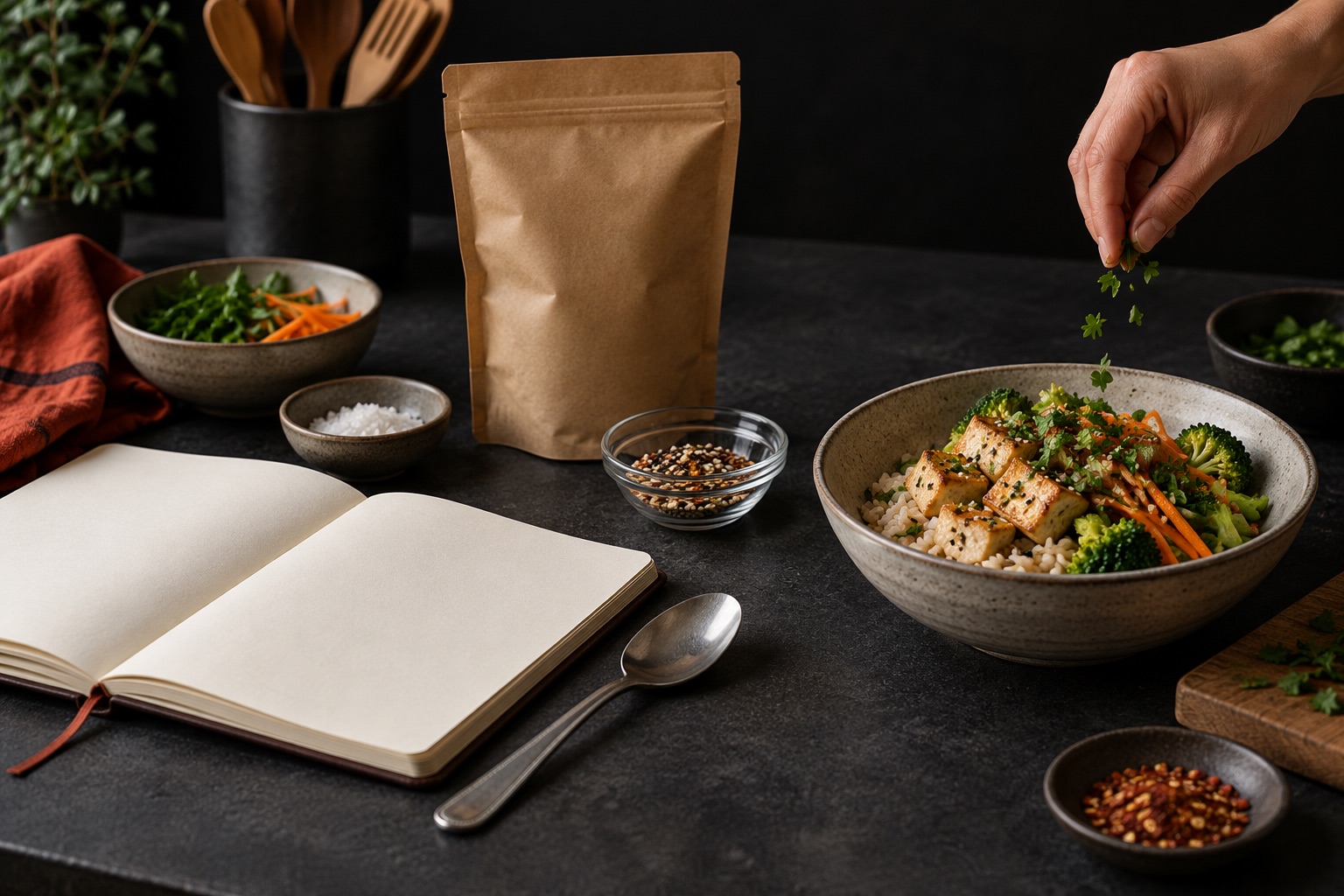
An illustration of the recommended connection from product thinking to an everyday meal. This is not Suchitra, ADC’s product, or a photograph of its production process.
AI-generated concept. An illustration of the recommended connection from product thinking to an everyday meal. This is not Suchitra, ADC’s product, or a photograph of its production process.

How to check the change

Compare eligible first-time visitors arriving from founder links with other sources. Ask new customers whether the founder influenced their decision; do not assume every order can be reliably traced to its source.

Positioning and the first impression

Build on it

TL;DR The food-first proposition is clear. Bring frozen preparation, delivery eligibility and product choice closer to the first buying decision.

Read the evidence and recommendations

What we observed

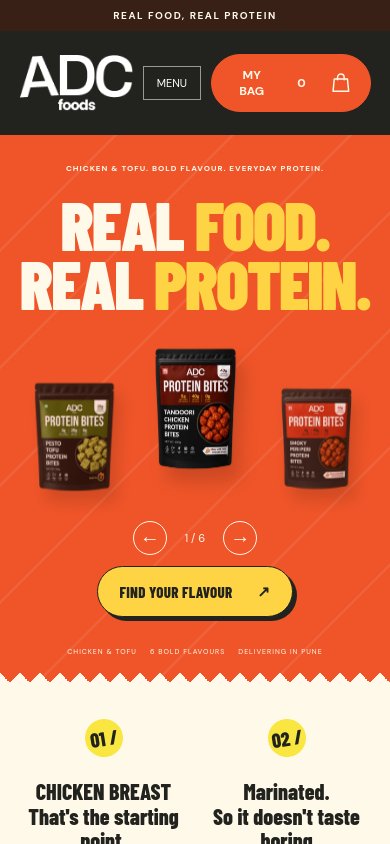
The homepage leads with chicken and tofu, six flavours and a strong product-pack presentation. Pune is mentioned below the hero and throughout the page. The process explains marinating and freezing; the main product grid features four chicken flavours. The two tofu products are linked from the hero but are not represented in that grid.

ADC’s homepage at a 390px viewport. This is a captured state, not a completed mobile shopping test.
Screenshot · Captured 19 October 2026. ADC’s homepage at a 390px viewport. This is a captured state, not a completed mobile shopping test. Original page ↗

Why it matters

The brand communicates appetite and an alternative to supplements. A visitor still needs to establish whether this is a ready-to-eat snack or food to cook, whether their address qualifies, and where to shop tofu.

What to do

  • Keep the appetite-led identity. Add a plain explanation near the hero action: frozen, ready-to-cook chicken and tofu bites, with Pune delivery eligibility.
  • Offer visible Chicken and Tofu shopping paths with flavour, pack weight and price in each product tile.
  • Use a concise positioning hypothesis: convenient, flavourful protein food for Pune shoppers who want easier everyday meals. Validate that audience with actual buyers.

How to check the change

Give five people unfamiliar with ADC a short first-look task. Ask what it sells, what preparation is required and where it delivers before showing them the answers.

Storytelling that helps someone choose

Opportunity

TL;DR ADC already explains the food process. Add the human reason and the evidence behind the product decisions.

Read the evidence and recommendations

What we observed

The current homepage describes the chicken-to-meal process and offers wrap, bowl and snack ideas. It does not include a named origin story, a development timeline or a specific account of how customer feedback shaped the products in the inspected copy.

Why it matters

The functional story is a useful base. A more specific origin story could explain why these flavours, why frozen, and why a first-time buyer should trust the team. Missing public detail does not mean this work never happened.

What to do

  • Build a short origin narrative around a verified customer problem, one meaningful product decision and the resulting meal experience.
  • Use real preparation and production footage with permission. Identify who appears and what the footage demonstrates.
  • Connect the story to a starter selection or recipe so it gives the reader a useful next step.

How to check the change

Ask readers to explain one concrete reason ADC’s product exists. If they recall only generic wellness language, the story needs more specificity.

Audience and buyer fit

Needs business data

TL;DR A creator following is a distribution opportunity. It is not proof of demand for frozen food in Pune.

Read the evidence and recommendations

What we observed

ADC’s inspected pages focus on Pune delivery and everyday meals. The accessible LinkedIn index includes business education and food-business activity. Instagram content, current engagement and audience geography could not be reliably inspected. No audience analytics or customer interviews were supplied.

Why it matters

It would be inaccurate to describe the whole audience as fitness buyers or to claim a strong audience–product match. Delivery geography, cooking habits, diet, freezer access and willingness to pay matter more than a follower total.

What to do

  • Interview recent buyers and interested non-buyers about their meal routine, location, cooking equipment and objections.
  • Compare customer location with aggregated creator-audience geography using account-owner data.
  • Start with buyer situations: a quick lunch, a meal-prep shortcut or a vegetarian protein option. Treat these as segments to validate.

How to check the change

Report the share of creator traffic that is delivery-eligible, then its first-order rate. Avoid comparing all social visitors with only eligible paid visitors.

The first purchase

Fix first

TL;DR The starter is a useful entry point. Resolve delivery and food-information uncertainty before asking people to commit.

Read the evidence and recommendations

What we observed

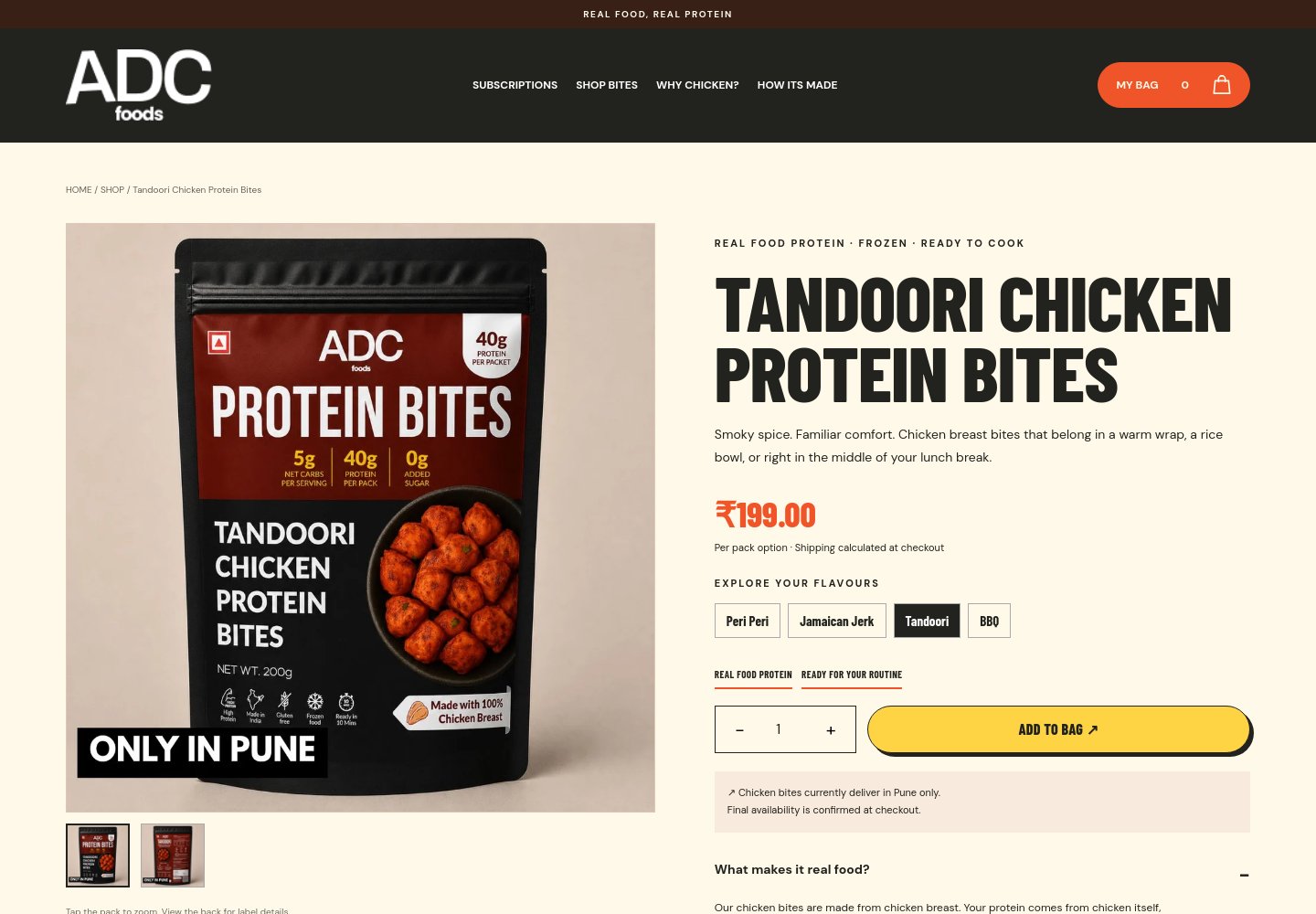
The chicken product page lists ₹199 and the Pesto Tofu page ₹149, with shipping calculated at checkout. Both defer final delivery availability to checkout. The 4-pack starter is ₹720, or ₹180 per pack. A standalone cart route exists; a completed add-to-cart or checkout session was not tested.

Tandoori Chicken’s purchase area: ₹199, flavour choice, add-to-bag action and Pune eligibility messaging. Final availability is deferred to checkout.
Screenshot · Captured 19 October 2026. Tandoori Chicken’s purchase area: ₹199, flavour choice, add-to-bag action and Pune eligibility messaging. Final availability is deferred to checkout. Original page ↗

Why it matters

A visitor can discover the product and price, but must continue to learn the final delivery outcome. The biggest known barriers are unanswered practical questions, not a measured number of clicks or a proven checkout failure.

What to do

  • Add an early PIN-code eligibility check with an honest unavailable state and the actual fee or fee rule.
  • Keep the starter close to the main shopping path, with exact contents and a clear distinction between chicken and tofu offers.
  • Test quantity changes, cart persistence, back navigation, invalid addresses and payment failures on mobile before recommending layout changes to checkout.

How to check the change

Track eligible product visitors, cart additions, checkout starts and paid orders. Diagnose delivery rejection separately from payment failure.

Food information and trust

Fix first

TL;DR The label images contain useful detail. Make that information readable and check the artwork before repeating nutrition claims.

Read the evidence and recommendations

What we observed

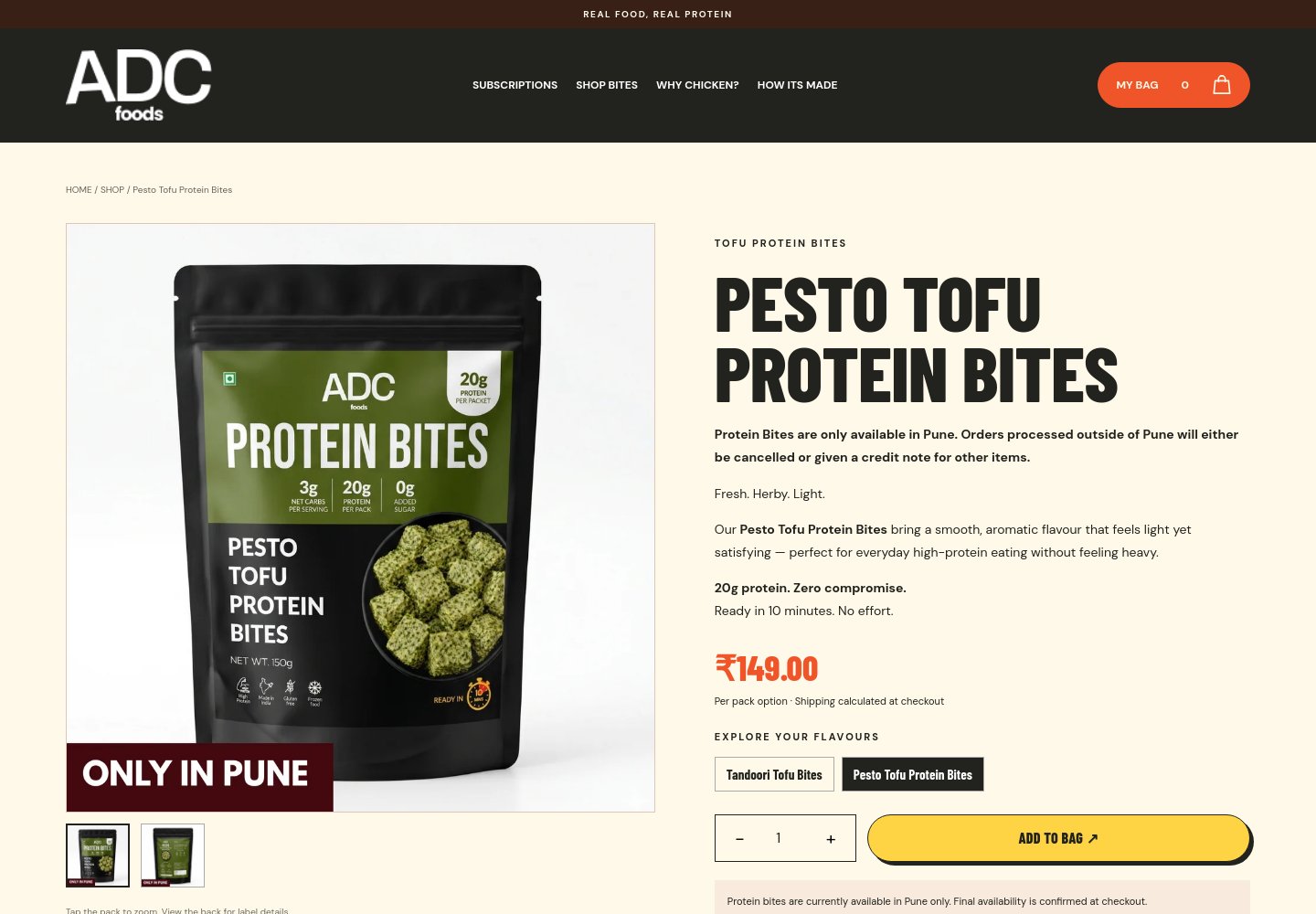
The chicken and tofu pages direct buyers to back-of-pack images or their physical pack for ingredients, allergens and nutrition. The inspected Tandoori image lists milk and mustard; the Pesto Tofu image lists soy, walnuts and Parmesan dairy. Tofu therefore must not be presented as automatically vegan. The current transparency page’s main HTML contains a heading and an introduction, without report links.

Pesto Tofu’s current product page. Read the product-specific label before applying dietary assumptions to tofu.
Screenshot · Captured 19 October 2026. Pesto Tofu’s current product page. Read the product-specific label before applying dietary assumptions to tofu. Original page ↗
Tandoori Chicken back-of-pack artwork with ingredients, nutrition and preparation details
Tandoori Chicken artwork. Open the original image to inspect the label.
Pesto Tofu back-of-pack artwork with soy, walnut and dairy ingredient information
Pesto Tofu artwork. Images are brand-provided evidence, not independent verification of current stock.

Why it matters

A pack image is evidence, but small print is a poor primary way to answer a pre-purchase allergy question. A physical pack cannot answer that question before the customer orders. The image proves what the artwork says, not the current recipe or an independently verified laboratory result.

What to do

  • Publish selectable, product-specific ingredients, allergens, nutrition basis, net weight, storage and preparation text beside the purchase area, approved against current production information.
  • Have the food technical owner reconcile the Pesto label: the displayed per-100g and per-150g protein and sodium values do not scale consistently. Do not calculate new claims from this artwork.
  • Restore dated original reports where available, with exact product, sample, method and scope. A test on one sample does not prove every batch or every claim.

How to check the change

Verify each current recipe, pack and online table against approved records. Complete a separate qualified review of food claims and applicable labelling obligations; this audit makes no compliance determination.

Brand identity and usable design

Build on it

TL;DR Keep the distinctive food identity. Improve navigation and access to information before considering a visual redesign.

Read the evidence and recommendations

What we observed

The live homepage inspection showed orange surfaces, bold condensed headings and prominent pack photography. Current delivered product pages use the same custom site shell. Mobile-menu markup and a skip link exist. A full mobile, keyboard, screen-reader or contrast audit was not completed.

Why it matters

ADC has a recognizable visual base. The clearer opportunity is making chicken/tofu choice, support and product facts easy to find. Responsive code is not proof that the experience works well on a phone.

What to do

  • Preserve the pack-led identity and food photography while strengthening navigation for both product ranges.
  • Test menu, carousel, product-image zoom, cart drawer and accordions with keyboard and touch; verify focus moves and returns correctly.
  • Check real devices, enlarged text, reduced motion, slow connections and the readability of label images. Measure contrast rather than judging it by eye.

How to check the change

Run representative journeys at narrow mobile, tablet and desktop widths. Record actual failures and screenshots before claiming accessibility or speed results.

Education and cooking confidence

Improve next

TL;DR Meal ideas already exist. Turn them into product-specific guidance someone can use before buying.

Read the evidence and recommendations

What we observed

The homepage offers three meal-use tabs and a storage FAQ. The chicken page tells buyers to follow the pack’s instructions; the Pesto Tofu description mentions ten-minute preparation. Back-of-pack images include method-specific directions. The online text does not reproduce those full directions.

Why it matters

Buyers need to understand the actual effort, equipment and storage conditions. Broad convenience language should not erase the difference between chicken and tofu or imply that frozen chicken is ready to eat.

What to do

  • Publish product-specific cooking methods approved by the food team, including the required equipment and preparation state.
  • Create a short first-meal guide using the exact product. Separate the bites’ nutrition from any added wrap, sauce or rice.
  • Answer practical questions: receiving a delivery, freezer storage, opening a pack and what to do if something arrives in an unexpected condition. Use validated guidance.

How to check the change

Observe a first-time customer following the instructions. Record confusion, preparation time and support questions without treating a small test as a safety validation.

Creator integration across the journey

Opportunity

TL;DR Use Suchitra where she can answer a real question, from the first click to the first meal.

Read the evidence and recommendations

What we observed

No founder introduction, founder video or direct creator-profile links appear in the inspected homepage’s main content and footer. The submitted social profiles were research inputs. Actual Instagram bio links, campaign destinations and historical campaigns were not verified.

Why it matters

A product-relevant creator presence could make the journey feel connected. Repeating a face everywhere or inserting an autoplay video would not establish trust on its own.

What to do

  • Use one short founder explanation of the product problem, with captions, a transcript and optional playback.
  • Link each relevant creator post to the matching food, recipe or starter page using campaign tags.
  • Invite people into a useful meal series with explicit consent. Explain what they receive and how often, rather than collecting contacts without a clear promise.

How to check the change

Compare source-tagged journeys and first-meal feedback. Keep tracking limitations visible; a visit after a post is not certain proof that the post caused the purchase.

Repeat orders and subscription clarity

Improve next

TL;DR Bulk packs already reduce the price per pack. Make their one-time nature obvious and validate repeat demand before adding recurring billing.

Read the evidence and recommendations

What we observed

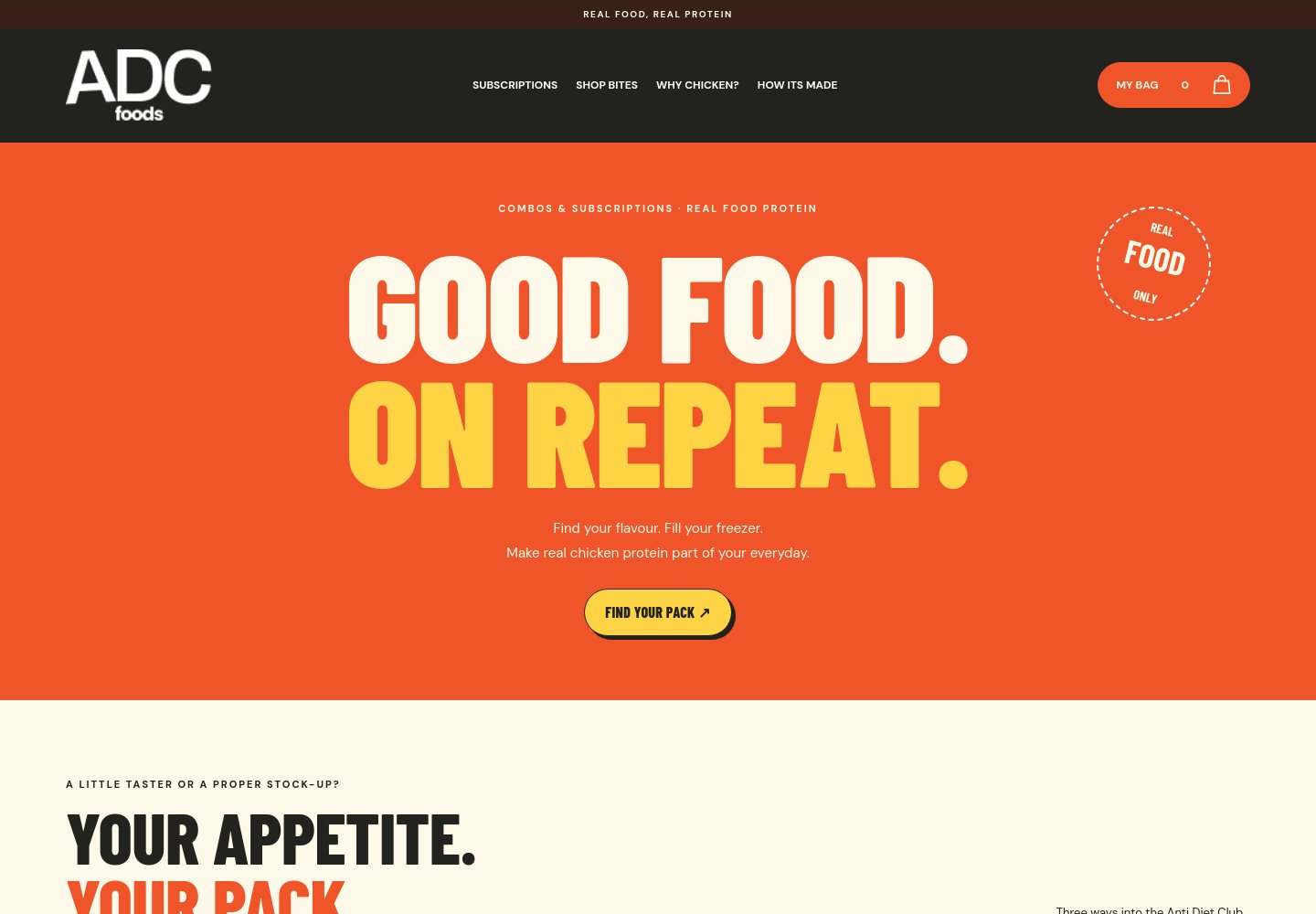
Navigation says subscriptions, while the combos page explicitly explains that buying a pack does not create automatic recurring payments. It lists 4, 25 and 50 packs. The inspected Tandoori product data does not list any recurring purchase plans. No post-purchase messages, customer account or reorder experience was tested.

ADC’s combos destination. Bulk packs and automatic recurring subscriptions should be distinguished in the navigation and offer copy.
Screenshot · Captured 19 October 2026. ADC’s combos destination. Bulk packs and automatic recurring subscriptions should be distinguished in the navigation and offer copy. Original page ↗

Why it matters

Bulk purchasing and an automatic subscription are different promises. A large stock-up can require substantial freezer space and spending. Its existence does not establish customer retention or suitability for a first order.

What to do

  • Rename the main destination to bundles or stock-up packs unless an actual recurring plan is available; keep the one-time payment explanation next to the offer.
  • Test consent-based reorder reminders timed to observed consumption and a useful first-meal follow-up.
  • Introduce recurring plans only after validating delivery reliability, customer demand, money left after fulfilment, cancellation, skipping and delivery frequency.

How to check the change

Measure 30-, 60- and 90-day repeat purchase for comparable first-order groups, alongside complaints, refunds and money left after fulfilment.

Analytics and experiments

Needs business data

TL;DR Instrument the purchase journey before promising uplift. Public pages cannot tell us whether ADC is already testing effectively.

Read the evidence and recommendations

What we observed

Storefront source includes Shopify analytics-related code. No analytics dashboard, event validation, ad account, experiment history, traffic volume or paid-order export was available. The presence of scripts does not prove usable measurement.

Why it matters

The supplied checklist’s suggestion that a static-looking site is probably not testing is too strong. Experiments can run invisibly, and visible variants can be unrelated to a controlled test.

What to do

  • Validate product-view, delivery-check, add-to-cart, checkout and paid-order events, with no duplicate paid-order counts.
  • Tag creator and campaign links consistently and reconcile measured orders with the order system.
  • Test one clear change at a time after urgent fixes. At low traffic, combine usability sessions and interviews with directional data rather than claiming statistical certainty.

How to check the change

Set a baseline, eligibility rule, primary measure, decision window and refund/complaint checks before each experiment. Report results with denominators and uncertainty.

Delivery, policies and support

Fix first

TL;DR Repair the support foundation before increasing traffic: two linked policies fail and the contact page offers no contact method in its main content.

Read the evidence and recommendations

What we observed

Direct requests to the footer’s shipping and refund URLs returned 404 (page not found) on 19 October. The Contact page returned HTTP 200, but its main HTML contained only its title. A privacy policy exists and includes business contact details; it is not linked in the inspected custom footer. A fulfilled order was not tested.

The Contact page as captured: a heading with no contact method in the main page content. Contact details do exist in ADC’s privacy policy.
Screenshot · Captured 19 October 2026. The Contact page as captured: a heading with no contact method in the main page content. Contact details do exist in ADC’s privacy policy. Original page ↗

Why it matters

A buyer following the obvious support path cannot find delivery or refund terms at those links. This is a confirmed public-content issue, not proof of poor real-world customer service or a legal violation.

What to do

  • Restore shipping and refund pages and a contact page with a maintained email or phone, support hours and an achievable response expectation.
  • State actual Pune service areas, delivery windows, charges, receiving expectations and the process for damaged, incorrect or temperature-concern orders.
  • Link privacy and applicable terms from the footer. Have the owner approve policy promises and obtain appropriate legal review rather than copying another brand’s wording.
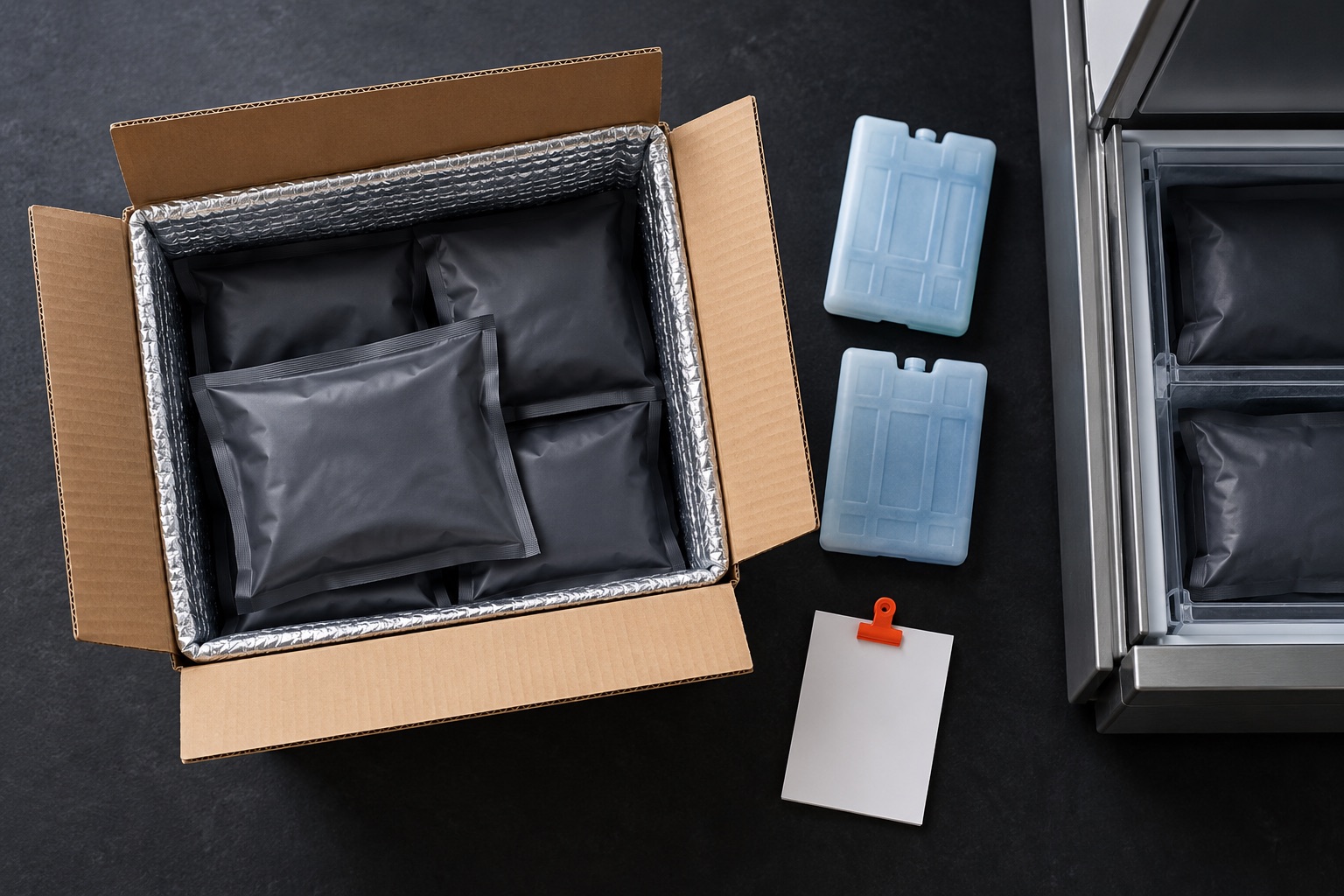
An illustration of the delivery information a frozen-food buyer needs to understand. This is not ADC’s packaging or a validated packing specification.
AI-generated concept. An illustration of the delivery information a frozen-food buyer needs to understand. This is not ADC’s packaging or a validated packing specification.

How to check the change

Verify each footer link returns the intended substantive page. Test delivery exceptions with the operations team and compare the final checkout promises with the policies.

Brand and operating resilience

Needs business data

TL;DR Build repeatable product trust and direct customer relationships. Channel concentration and delivery risk need internal evidence.

Read the evidence and recommendations

What we observed

ADC’s direct site presents its own name, product range and meal use cases, which gives it an identity beyond a named creator. Public pages alone do not reveal revenue concentration, supplier dependencies, delivery failure rates or reliance on a particular marketplace.

Why it matters

It would be speculative to claim that the business collapses without the creator or is dependent on one channel. Frozen food does make storage, fulfilment and exception handling important diligence topics.

What to do

  • Review revenue and contribution (money left after variable costs) by channel, city zone and product, together with fulfilment incidents and replacement costs.
  • Document ownership of product information, support, quality escalation and content so routine work does not depend on one person.
  • Build an opted-in direct customer base and a consistent product world. Expand geography only when the delivery system and economics support it.

How to check the change

Run an operational handover exercise and review a real exception from order to resolution. Use aggregated data and avoid exposing customer information in the report.

The five-minute buyer test

Synthesis

TL;DR ADC makes the food appealing. Confidence in delivery, ingredients and support is the next job.

Read the evidence and recommendations

What we observed

A new visitor can identify the food formats, see pack prices, discover a chicken starter and find everyday meal ideas. The inspected support routes and text-accessible food information leave avoidable questions. This synthesis reflects the reviewed evidence, not a representative customer study.

Why it matters

The recommended order is practical: fix broken reassurance, explain the product completely, make the first choice easy, then strengthen the creator connection and measure repeat demand.

What to do

  • Ask unfamiliar, delivery-eligible shoppers to choose a chicken or tofu product, explain its preparation and find its allergens without help.
  • Ask them to establish delivery cost and timing, then find a human contact and the remedy for an incorrect order.
  • Record task completion and reasons for hesitation. Repeat the same tasks after fixes before commissioning a broader redesign.

How to check the change

Success means buyers can make an informed choice and complete the verified journey. Revenue uplift remains an experiment outcome, not an audit promise.

A practical order of work.

TL;DR Repair essentials, clarify the offer, then test growth ideas. The timing below is a proposed sequence, not an agreed delivery commitment.

First week: restore confidence

Owner: ADC operations, food technical owner and web team.

  • Restore policy routes and contact content. Verify the footer.
  • Approve product facts and reconcile label artwork before publishing claims.
  • Document delivery areas, fees, receiving expectations and exception handling.
  • Validate order-event tracking against actual orders.

Done when: support links work, food facts are approved and the team can explain fulfilment and measurement without conflicting answers.

Following weeks: improve the first order

Owner: Aetis with ADC’s product and operations team.

  • Bring delivery eligibility and approved facts into the buying path.
  • Expose tofu alongside chicken and clarify bundle naming.
  • Add a verified founder introduction and product-specific first-meal guide.
  • Run observed mobile buying tasks, including failure states.

Done when: unfamiliar shoppers can choose, understand preparation and find delivery and support answers; the shopping path passes real browser checks.

After a reliable baseline: test repeat demand

Owner: ADC growth, support and operations.

  • Test creator-to-starter and creator-to-recipe destinations.
  • Send useful, consent-based first-meal and reorder messages.
  • Review repeat purchase, delivery complaints and contribution by first-order group.
  • Consider recurring plans only when customer demand and fulfilment support them.

Done when: decisions use observed customer behavior and money left after delivery, rather than assumptions from the website.

Know what changed.

TL;DR Measure informed first purchases, reliable deliveries and repeat demand. An audit cannot promise a conversion increase.

Minimum measurement plan
QuestionMeasureRead it carefully
Do eligible people buy?Paid first orders ÷ unique delivery-eligible visitors, with a defined time windowTrack out-of-area visitors separately. Report the sample size.
Where do people hesitate?Product → cart → checkout → paid order, using consistent visitor/session definitionsSeparate delivery rejection, payment error and voluntary exit.
Do deliveries meet the promise?On-time orders, quality concerns, wrong items and resolution timeBreak down by zone and product. No successful delivery was tested here.
Do customers come back?30/60/90-day repeat rate by first-order monthOnly include groups old enough to have completed the observation window.
Does growth pay?Net revenue less product, packaging, delivery, payment fees, discounts and support costs; acquisition cost separatelyState tax/refund treatment. Revenue and gross order value are not profit.
Does founder traffic help?Tagged-link traffic, eligible first orders and buyer-reported influenceMissing tags and cross-device journeys limit attribution.
A first experiment worth running

Make delivery eligibility clear before the cart.

Hypothesis: an early eligibility check helps Pune shoppers make an informed choice and reduces late delivery surprises.

Primary measure: paid-order rate among eligible first-time visitors. Also examine checkout delivery rejections, support requests and the effect of a failed delivery-check service.

Before launch: fix the broken policies, verify tracking, agree a baseline and decision rule, and check that the interface does not collect unnecessary personal information.

Decision: use a controlled comparison only if traffic supports it. Otherwise use observed customer tasks and a clearly labelled before/after trend, with no causal certainty.

What we need from ADC.

These answers turn recommendations into a scoped project. No customer-identifying data is needed in the shared audit.

Product and fulfilment

  • What are the current approved recipes, nutrition records, allergen statements and pack versions?
  • Which reports are current, and exactly what do they verify?
  • Which PIN codes qualify, at what charge and delivery window?
  • Who owns quality exceptions, refunds and support response promises?
  • Are bundles fulfilled together, and what storage capacity do they require?

Customers and growth

  • Why did recent customers buy, hesitate or choose another option?
  • How much traffic is delivery-eligible, and what share comes from Suchitra?
  • What do first-order and repeat-order groups show after refunds and fulfilment costs?
  • What is Suchitra’s verified role and product-relevant origin story?
  • Which messages, plans and experiments already run after purchase?

What this review can establish.

TL;DR A dated review of public pages, with selected visual inspection. It is not a completed purchase, food-safety certification or commercial due diligence.

Reviewed

  • Fresh direct page retrievals on 19 October 2026 for ADC home, two products, bundles, cart, support and privacy routes.
  • Live homepage appearance plus dated desktop/product/reference screenshots and a mobile homepage capture.
  • Chicken and tofu back-of-pack images, visually inspected.
  • Protein Pantry and Good Girl Snacks public pages, with the retrieval method specified per source.
  • The supplied 14-part checklist, with inference risks corrected.

Still unverified

  • Mobile interactions, cart mutations, checkout, payment and fulfilled orders.
  • Full accessibility, real-device performance, security and consent behavior.
  • Independent nutrition testing, label approval, licence validity or legal compliance.
  • Instagram content and audience analytics, revenue, margins, repeat purchases and experiment history.
Why older search results were excluded

Indexed ADC product and transparency pages showed older content than freshly retrieved pages. The report uses current delivered content for those findings. It does not present the older nutrition table, placeholder report text or old visual shell as current defects.

Local browser control was unavailable for part of the review. Dated screenshots were subsequently captured through Cloudflare’s remote browser service. A screenshot captures appearance at that moment; it does not verify the entire shopping journey. Scores and guaranteed uplift forecasts are intentionally omitted.

The plain-language guide.

Useful terms for the conversation, explained without the shorthand.

D2C
Direct to consumer: the brand sells to the customer through its own storefront.
Positioning
Who the product is for, what job it does and why someone would choose it.
Conversion rate
The share of a clearly defined group that completes an action, such as buying.
Funnel
The sequence from discovery to purchase, used to locate where people stop.
Product page / PDP
The page for one product, where a shopper checks details and chooses to buy.
CTA
Call to action: a button or link asking someone to take a specific next step.
SKU
A distinct product or pack option tracked separately in inventory.
Serviceability
Whether the brand can actually deliver to an address under its stated rules.
Cold chain
The temperature-controlled storage and transport needed for frozen food.
Retention and repeat rate
Whether customers continue buying; repeat rate counts customers who order again within a defined window.
Cohort
A comparable customer group, such as everyone who placed their first order in July.
LTV
Lifetime value: an estimate of customer value over a defined relationship period. State whether the estimate uses revenue or contribution.
CAC
Customer acquisition cost: the defined sales and marketing spend needed to gain a new customer.
Contribution
Money left from an order after the specified variable costs, before broader overheads.
UTM tags and attribution
Link labels help identify traffic sources. Attribution estimates which sources influenced an order and is always incomplete.
A/B test
A controlled comparison of two experiences with a defined measure and decision rule.
UGC / social proof
Customer-created content or other people’s experiences. Verify authenticity and obtain permission before reuse.
404
The server response meaning that a requested page was not found.

The source register.

Reviewed 19 October 2026. Links open the original pages in a new tab; their contents, prices and availability can change. Sources marked access-incomplete do not substantiate conclusions about their unseen content.

  1. ADC Foods homepage

    Live desktop visual inspection; fresh HTML retrieval; dated remote screenshot

    Current custom homepage. Scope includes main content, navigation and footer.

  2. Tandoori Chicken product

    Fresh HTML and embedded product data; dated remote screenshot

    The older indexed nutrition table and old Shopify shell were excluded from current findings.

  3. Pesto Tofu product

    Fresh HTML retrieval; dated remote screenshot

    Product description, purchase copy and nutrition guidance inspected.

  4. Tandoori back-of-pack artwork

    Label image visually inspected

    Artwork is not independent proof of recipe, testing, licensing or current physical stock.

  5. Pesto Tofu back-of-pack artwork

    Label image visually inspected

    Soy, walnut and dairy text observed. Nutrition column scaling needs owner review.

  6. Combos and subscriptions

    Fresh HTML retrieval; dated remote screenshot

    Listed price snapshot; automatic recurring payments explicitly excluded for pack purchases.

  7. ADC cart route

    Fresh HTML retrieval, empty cart

    No checkout, payment, cart persistence or delivery test was completed.

  8. ADC contact route

    HTTP 200; fresh main-content HTML; dated remote screenshot

    Main section contains only the Contact heading.

  9. Linked shipping policy

    Direct HTTP request returned 404

    Linked from current footer. This establishes a failed URL at review time.

  10. Linked refund policy

    Direct HTTP request returned 404

    Linked from current footer. No conclusion about actual refund handling.

  11. ADC privacy policy

    Fresh HTML retrieval

    Policy and business contact details exist. Legal adequacy and consent behavior not assessed.

  12. ADC transparency route

    Fresh main-content HTML

    Title and short introduction only; older indexed detailed report copy excluded.

  13. Protein Pantry homepage

    Fresh HTML; public-source benchmark

    Packing explanation, product choices, meal content and support observed; operational claims not independently tested.

  14. Protein Pantry Tandoori Chaap

    Fresh HTML; public-source benchmark; dated remote screenshot

    PIN-check interface, ingredients, pack options, review content and cooking methods. Actual PIN response not tested.

  15. Protein Pantry lab-report directory

    Public web extraction

    Dated product entries observed; original report files and accreditation not validated.

  16. Protein Pantry founder story

    Public web extraction

    Brand’s own account; commercial performance not verified.

  17. Good Girl Snacks homepage

    Fresh HTML; public-source benchmark; dated remote screenshot

    Product-world language, assortment, club and format navigation observed. Stock status is time-sensitive.

  18. Good Girl Snacks founder story

    Fresh HTML and public web extraction

    Founders’ account of shared cultural roots and product decisions. No creator-audience conversion evidence.

  19. Suchitra Kodlekere on LinkedIn

    Search-indexed public profile content

    Limited access. Used only for public business/content context, not audience analytics, legal ownership or verified financial claims.

  20. Suchitra Kodlekere on Instagram

    Provided by client; access incomplete

    Not used to assert follower count, engagement, current bio link or audience interests.